What Drives the Big Demand for Bird’s Nest
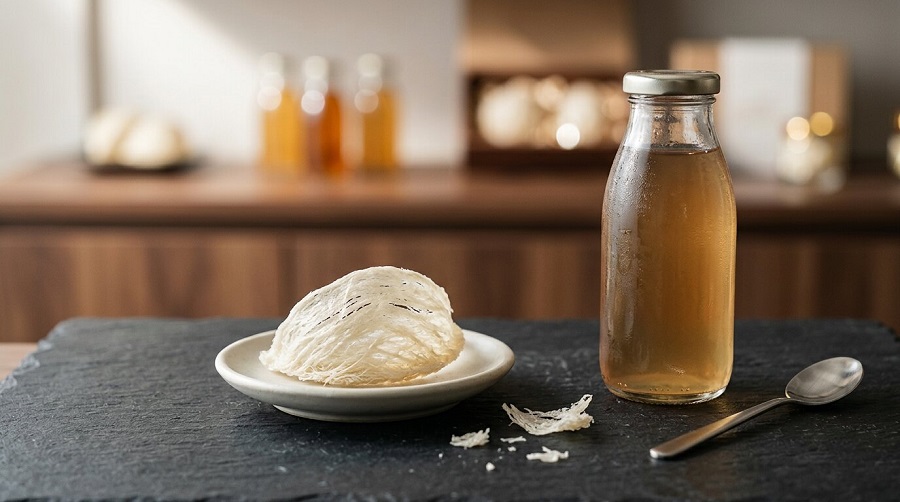
When you hear about people paying hundreds or even thousands for bird’s nest, you might wonder what could justify the cost. You’re not just looking at a rare ingredient; you’re seeing a mix of centuries‑old beliefs, modern wellness trends, and status‑driven gifting.
Add in rising incomes, savvy branding, and new ready‑to‑drink formats, and demand keeps climbing. But that’s only part of the story behind this unusual luxury.
What Bird’s Nest Is and Why It’s So Valuable
Bird’s nest, commonly consumed as bird’s nest soup, is composed of the hardened saliva of edible‑nest swiftlets. The nests are collected from natural cave walls or from purpose‑built swiftlet houses and are traded as a high‑value food ingredient. Their price reflects a combination of biological scarcity, collection risks, and labor‑intensive processing.
In the past, most nests were harvested from caves, where collectors climbed steep, hazardous rock faces. This limited the volume that could be safely collected and contributed to higher market prices. The development of swiftlet houses has enabled more controlled nesting environments and multiple harvests per year, increasing overall supply and improving consistency in quality. However, high‑grade nests remain relatively limited because of specific requirements related to cleanliness, color, shape, and minimal damage during harvesting and cleaning.
In the global market, unprocessed or minimally processed “raw” nests account for the majority of total value, as they're preferred for traditional cooking and are often perceived as higher status. At the same time, processed formats, such as powders, capsules, and ready‑to‑drink beverages, have grown in availability.
These products are positioned as more convenient and shelf‑stable, and they allow manufacturers to use smaller or broken nest pieces that are less suitable for whole‑nest presentation. This has broadened access to bird’s nest while maintaining its image as a premium product.
How Health and Beauty Benefits Drive Bird’s Nest Demand
Beyond its rarity and price, bird’s nest continues to see strong demand, largely driven by perceptions of its health and beauty value, often summarized under the broad appeal of bird’s nest benefits. It is widely regarded as a functional food, containing proteins and amino acids that may support skin health and overall well-being, although the scientific evidence remains varied and is still evolving.
Consumers are increasingly turning to convenient, processed formats such as powders, capsules, and ready-to-drink tonics. This segment alone is estimated at around USD 2.7 billion and is growing at an annual rate of approximately 9.8%.
At the same time, rising health awareness, especially across the Asia-Pacific region, combined with increasing disposable incomes, is fueling interest in products marketed for immune support and skin rejuvenation. Together, these trends are helping drive projections that the global bird’s nest market could reach nearly USD 6.5 billion by 2033.
The Cultural Traditions Sustaining Bird’s Nest Demand
Cultural traditions continue to underpin demand for bird’s nest, even as its products and formats diversify. The practice is often traced to Chinese imperial cuisine of the Ming dynasty (1300s–1600s), where bird’s nest soup was associated with status and perceived health benefits. Within traditional Chinese medicine, bird’s nest is commonly linked to skin health, immune support, and general vitality, which encourages continued consumption across generations.
In contemporary settings such as Hong Kong, a serving of high‑grade bird’s nest soup can be priced at up to around US$100, reflecting its role as a premium good rather than an everyday food. Consumption often carries social and symbolic value, particularly in gift‑giving, where it can signal prosperity, care, and auspicious intent.
Chinese diaspora communities have maintained these customs abroad, supporting global demand. At the same time, bird’s nest is now incorporated into a wider range of products—such as desserts and ready‑to‑drink beverages—helping it remain relevant within changing dietary habits and consumer preferences.
How Rising Incomes and Luxury Trends Fuel Bird’s Nest Demand
While bird’s nest consumption is rooted in long-standing cultural practices, rising incomes and evolving luxury consumption patterns are now broadening its customer base and reinforcing demand. As the middle class expands in key markets—particularly in China, which accounts for an estimated USD 2.5 billion in demand, and in Southeast Asia—higher disposable incomes are contributing to increased spending on premium foods. This trend supports projections that the global bird’s nest market could approach USD 6.5 billion by 2033.
In many cases, consumers are purchasing bird’s nest not only for its perceived nutritional and health benefits, but also for its association with social status and premium lifestyle choices. High price points, such as bowls reportedly reaching around USD 100 in Hong Kong, reflect its positioning as a luxury product. Established brands like Golden Nest, together with reported margins in the range of 20–40%, illustrate how traditional prestige, wellness-oriented marketing, and premium branding strategies have helped position bird’s nest as a visible indicator of affluence in Asia Pacific and, increasingly, in certain segments of the North American market.
How Convenience Products Are Expanding Bird’s Nest Consumption
From traditional soup to shelf‑stable jars and ready‑to‑drink tonics, convenience formats are reshaping how and where consumers use bird’s nest. Time‑intensive steps such as soaking and double‑boiling are no longer necessary for many products;
jarred, canned, and pre‑steamed options reduce preparation time and lower the effort required. These developments support growth in processed bird’s nest products, which account for approximately USD 2.7 billion in sales and are expanding at an estimated annual rate of 9.8%.
Online retail, with a market size of about USD 1.8 billion and a compound annual growth rate of roughly 10.5%, is extending distribution beyond traditional East and Southeast Asian hubs to regions such as California, New York, and Texas.
In parallel, powders, capsules, and ready‑to‑drink products are drawing interest from consumers focused on health and wellness. This supports the nutraceutical segment, valued at around USD 1.5 billion, and encourages manufacturers to prioritize shelf‑stable product development, partly because these formats often offer higher margins than traditional preparations.
Global Bird’s Nest Market Size and Future Growth
The global edible bird’s nest market is expanding, with a value of approximately USD 5.7 billion in 2024 and projections of around USD 6.5 billion by 2033, corresponding to an estimated compound annual growth rate (CAGR) of about 9.2% from 2025 to 2033. Some higher-end forecasts indicate the market could reach close to USD 14.9 billion by 2032, though such projections depend on assumptions about continued demand growth, regulatory stability, and supply conditions.
Growth is currently stronger in processed bird’s nest products than in raw nests. This is driven by factors such as increased positioning of bird’s nest as a health and beauty ingredient, rising disposable incomes among middle-class consumers in key markets, and its incorporation into premium nutraceutical products and higher-end food and beverage offerings. These trends support value-added product development and may contribute to a gradual shift in market share from raw to processed formats over time.
Regional Hotspots Where Bird’s Nest Demand Is Surging
Beyond overall growth figures, demand for bird’s nest is concentrated in several key regional hubs that significantly influence the market’s direction. The Asia-Pacific region accounts for more than 60% of global market value, reflecting both long-standing cultural usage and growing interest in functional foods.
Within this region, China is the largest single market, generating an estimated USD 2.5 billion in annual sales and growing at around 8.3% per year, supported by cultural familiarity with bird’s nest products and increasing health-conscious consumption.
Indonesia and Malaysia are also important markets, with approximate values of USD 1.2 billion and USD 0.9 billion respectively. These countries play a dual role as major producers and substantial consumer bases, reinforcing their strategic position in both upstream supply and downstream demand.
Outside Asia-Pacific, North America—particularly states such as California, New York, and Texas—has been recording relatively rapid growth, driven by expanding Asian diaspora communities and rising interest in premium health-oriented products.
Europe, the Middle East, and Latin America show more moderate but steady increases in demand, suggesting a gradual broadening of the consumer base beyond traditional core markets.
Sustainability, Ethics, and How They’ll Shape Bird’s Nest Demand
Sustainability and ethical considerations are becoming central factors in determining which bird’s nest products are accepted by buyers and regulators. Documented declines in wild swiftlet populations, including cave colonies in areas such as Niah and the Andaman and Nicobar Islands, have been linked in part to overharvesting and destructive collection methods.
In response, markets increasingly require evidence that nests are traceable to their source, collected using non-destructive practices, and processed under recognized standards such as ISO, HACCP, or GMP. The expansion of swiftlet farming in purpose-built houses has introduced additional concerns related to animal welfare, local ecosystems, and community impacts.
To meet emerging sustainability-focused demand, producers are expected to demonstrate transparent supply chains, fair compensation for farmers and workers, and measures that limit ecological disruption, such as controlled colony densities and waste management practices.
Conclusion
When you look at bird’s nest, you’re not just seeing a delicacy—you’re seeing status, beauty, tradition, and innovation wrapped into one. You now know why its story spans culture, wellness, and luxury, and why rising incomes and convenient formats keep demand climbing. As you watch this market grow, pay attention to traceability and ethical sourcing—they’ll shape which brands win your trust and where this centuries‑old delicacy goes next.